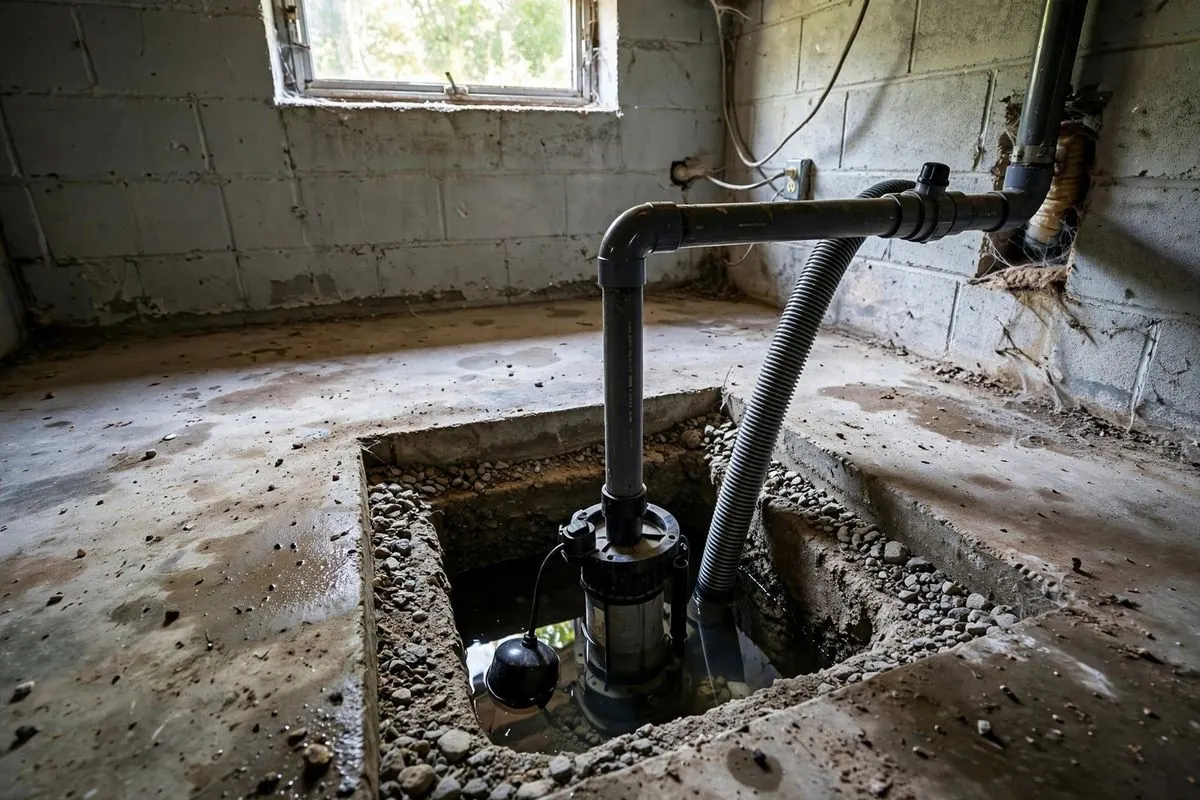
Why sump pumps fail when you need them most
A sump pump sits idle for weeks and then has to work hard during the heaviest rain. That is when worn switches stick, impellers jam with grit and power outages shut the motor down. Many failures are not mysterious. The float is stuck against the side of the pit, or the check valve is stuck, or the pump simply reached the end of its life.
Test the pump before the storm. Pour a bucket of water into the pit. The float should rise, the pump should start and the water should leave through the discharge pipe. If it does not, you have found the problem on a dry day instead of a wet one.
Common sump pump problems
Pump will not start
A stuck float, a tripped breaker or a dead motor leaves the pit to fill. Check the plug and outlet first.
Runs constantly
A float that will not drop, a failed check valve or a very high water table keeps the motor on and wears it out.
Noisy or vibrating
A damaged impeller, debris in the pit or a loose discharge pipe makes noise. Ignoring it shortens pump life.
Discharge frozen or blocked
Water that cannot leave the house backs up in the pit. Check where the pipe exits and whether it drains away from the foundation.
Battery backups and water alarms
A power failure often arrives with the storm that fills the pit. A battery backup pump takes over when the main pump stops, usually for a limited number of hours depending on the battery. A water alarm in the basement gives you notice if the level rises. Both are inexpensive compared with the cost of a flooded finished basement.
Backup pumps also need testing. A battery that is a few years old may not hold a charge. We check the system as a whole, including whether the discharge can handle two pumps. For basements that stay damp even when the pump works, see basement waterproofing.
Pump types
| Type | How it works | Best fit |
|---|---|---|
| Submersible | Sits in the pit, quiet and sealed | Most homes. |
| Pedestal | Motor sits above the pit | Narrow pits, easier access. |
| Battery backup | Runs on a deep-cycle battery | Homes that lose power in storms. |
| Water-powered backup | Uses municipal water pressure | Needs a check on local rules. |
Basement taking on water?
Call now. We can often diagnose by phone and send a plumber right away.
East Hartford note: discharge and sewer connections
Do not connect a sump pump discharge to the sanitary sewer. Check with the East Hartford Department of Inspections and Permits at (860) 291-7340 about where discharge may go and whether a permit applies to your installation.
East Hartford sits along the Connecticut River, and low-lying basements near the river and brooks can see higher water in wet seasons. If sewage, not groundwater, is coming up the floor drain, that is a different problem, and MDC asks you to call (860) 278-7850 and press 1 for a main-line backup.
The International Plumbing Code (IPC) covers sump pits, covers and discharge piping. The 2022 Connecticut State Building Code adopts the 2021 IPC, and your local official decides where sump discharge may go.
What affects the cost of sump pump service
A repair costs far less than a flooded basement.
Sump pump failure damage is often excluded from standard homeowner policies unless you have water backup coverage. Ask your agent.
Common questions
Yes. Pump failures tend to happen during storms, so the line is open around the clock.
Many last about ten years, depending on use and water table. A pump that runs often wears out sooner.
If your basement floods when power fails or the pump is your main protection, a backup is sensible.
A stuck float, failed check valve or high groundwater can keep it cycling. A plumber can find which.
Not always. See basement waterproofing for wall and floor seepage.