Start with the meter
The most common call begins with a number, not a puddle. A water bill jumps, or a neighbor mentions theirs did too, and nobody can find a leak. The meter is the quickest way to check. Shut off every faucet, appliance and ice maker, then watch the meter. If the dial or low-flow indicator keeps moving, water is leaving the system somewhere.
Next, close the main shutoff inside the house and look again. If the meter stops, the leak is inside. If it keeps moving with the main closed, the leak is on the service line between the meter and the house. That single test tells the plumber which tools to bring and saves an hour of searching.
Where hidden leaks show up in East Hartford homes
Ceilings and walls
A brown ring on drywall or paint that bubbles points to a supply or drain pipe above. The stain is often a few feet from the leak, since water runs along framing.
Under floors and in crawlspaces
Warm spots on a floor, a musty smell or the faint sound of dripping under the house suggest a pipe in the floor system.
Basement walls and floors
Damp patches may be a pipe leak or groundwater. Moisture testing tells the two apart.
Buried service lines and irrigation
A soggy patch in the yard that stays wet in dry weather often marks a leaking service line or sprinkler pipe.
The tools that find a leak without tearing out a wall
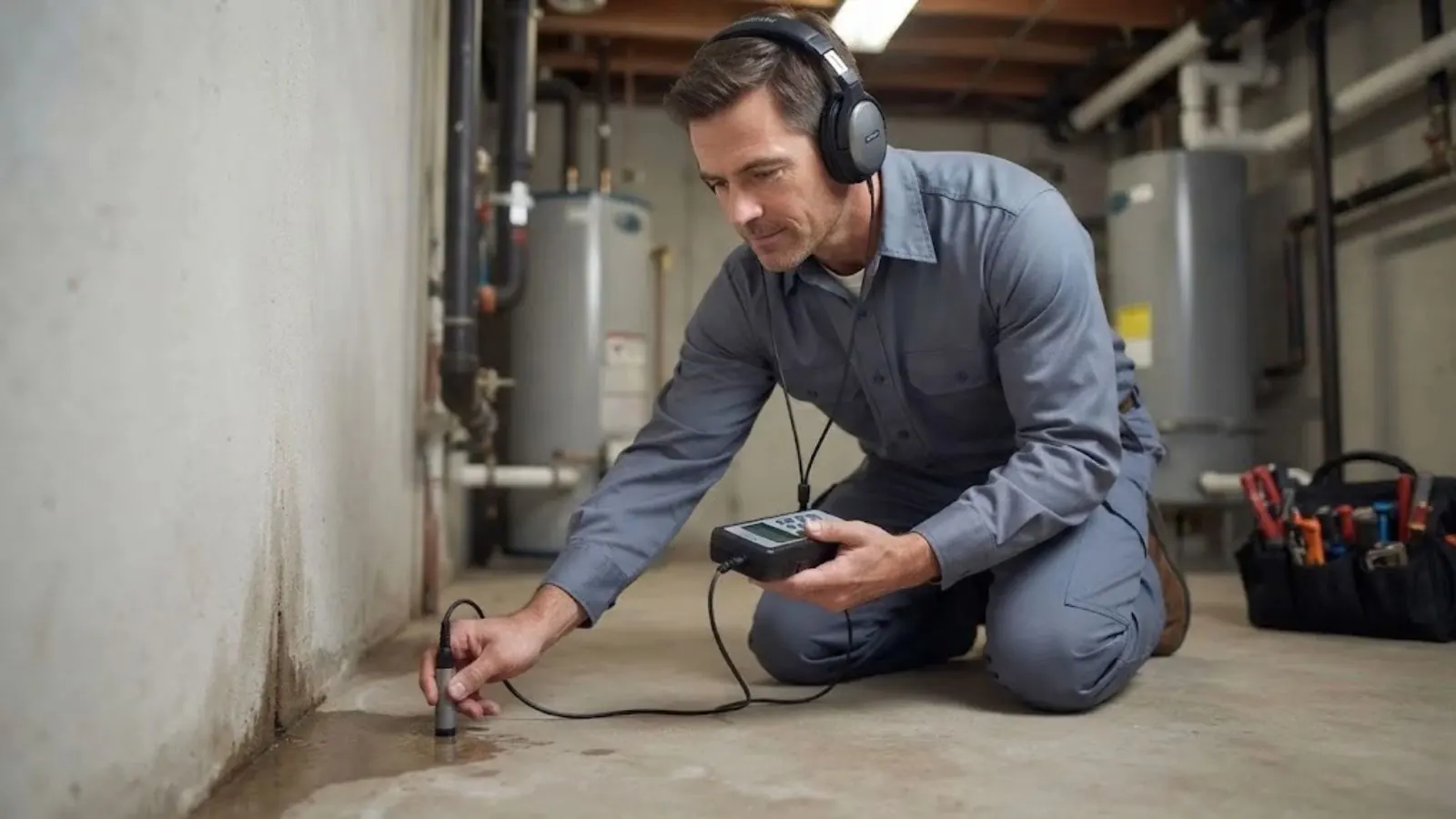
Plumbers use several methods and often combine them. An acoustic listening device picks up the hiss of pressurized water through the pipe. A thermal camera shows temperature differences, such as a warm hot-water line or a cool wet patch behind drywall. A moisture meter maps dampness. Tracer gas, a harmless mix pushed into a drained line, escapes at the leak and is detected from above.
Pressure testing narrows the zone. The plumber isolates sections of the system and watches whether the gauge holds. When the zone is small enough, the tools pinpoint the spot, and the opening in the wall or floor is limited to a hole you can patch.
Slab leaks, in plain terms
Many East Hartford homes have basements rather than slab foundations, which makes true slab leaks less common than in warmer regions. Still, additions, garages and some ranch-style houses sit on concrete. A slab leak shows as a warm floor, a running meter with no visible cause or the sound of water under the floor.
Detection on a slab uses the same listening and thermal tools. Repair options include rerouting the pipe through the walls or ceiling, which avoids breaking the floor, or opening the slab at the leak. The right choice depends on pipe material and access, which we explain after pinpointing the leak.
Pressure testing a suspect line uses test methods that the International Plumbing Code (IPC) also describes for new work. Connecticut adopts the 2021 IPC through its 2022 State Building Code, and repairs must meet it.
What to do before we arrive
A few observations make a leak easier to find.
- Shut off every fixtureThen read the meter and write the number down.
- Note wet spotsPhotograph stains and mark their edges with a pencil.
- Listen for running waterA hiss in a wall points to pressurized pipe.
- Protect belongingsMove items away from damp walls and floors.
Meter running with everything off?
Call now. A plumber can locate the leak and tell you what it will take to fix before opening any wall.
Leak symptoms and the first check
| Symptom | Likely area | First check |
|---|---|---|
| Meter moves with all fixtures off | Service line or hidden indoor leak | Close the main and watch the meter again. |
| Warm floor patch | Hot-water line under the floor | Check water heater runtime and floor temperature. |
| Ceiling stain that grows | Supply or drain line above | Shut off the nearest fixture and see whether it stops. |
| Wet yard in dry weather | Buried line or irrigation | Compare the meter before and after closing the irrigation valve. |
What affects the cost of leak detection
Detection is priced by the effort needed to find the leak, not the repair that follows.
Water damage from a sudden leak is often covered under a homeowner policy, while slow leaks and wear usually are not. Document the damage and ask your insurer.
Common questions
Yes. If water is actively running, the line is staffed around the clock. Close the main valve, call, and a plumber is dispatched for the earliest available time.
Usually not. Acoustic and thermal tools narrow the location first, so any opening is small and targeted.
Run the meter test described above. If the meter moves with every fixture off, you have a leak somewhere between the meter and your fixtures. If your meter is still, contact MDC about the billing.
Yes. Listening tools, thermal imaging and moisture mapping work on concrete floors. See sump pump service if groundwater is the cause rather than a pipe.
Responsibility for the service line depends on where the leak sits relative to the meter. Water line repair explains the typical split and how to find out.